










.jpg?width=770&height=513&name=Hershey%20Aerial%20(12).jpg)
Learn how relocatable modular buildings cut waste and boost flexibility.
Why Relocatable Modular Supports Sustainability Goals
Sustainability in construction is no longer a nice-to-have—it’s a strategic priority for schools, businesses, and public agencies across the Mid-Atlantic. As organizations look for ways to reduce waste, lower emissions, and make smarter use of capital, relocatable modular buildings are emerging as an important part of the solution.
Unlike traditional site-built structures that are designed for a single location and often demolished at the end of their useful life, relocatable modular buildings are created with reuse in mind. Individual modules are constructed in a factory, transported to a site, and assembled into offices, classrooms, clinics, or other facilities.
When needs change, those same modules can be disconnected, moved, and reconfigured to serve a new purpose. This inherent flexibility makes relocatable buildings a natural fit for temporary or semi-permanent space needs: swing space during renovations, jobsite offices for major construction projects, interim classrooms while a new school is built, or pilot facilities for healthcare and community services.
Instead of pouring money and materials into “throwaway” structures, organizations invest in assets that can serve many lives over decades. Beyond flexibility, relocatable modular construction offers tangible environmental benefits.
Factory-controlled production reduces material waste and allows for tighter quality control. Standardized designs simplify maintenance and upgrades, making it easier to keep buildings efficient throughout their lifespan.
Industry perspectives such as this article on the environmental benefits of modular construction: Environmental Benefits of Modular Construction—highlight how modular methods are helping the broader construction sector reduce its footprint.
For organizations balancing sustainability goals with real-world budget and schedule pressures, relocatable modular buildings offer a way to do more with less—less waste, less disruption, and less stranded capital.
How Relocatable Buildings Minimize Waste and Disruption
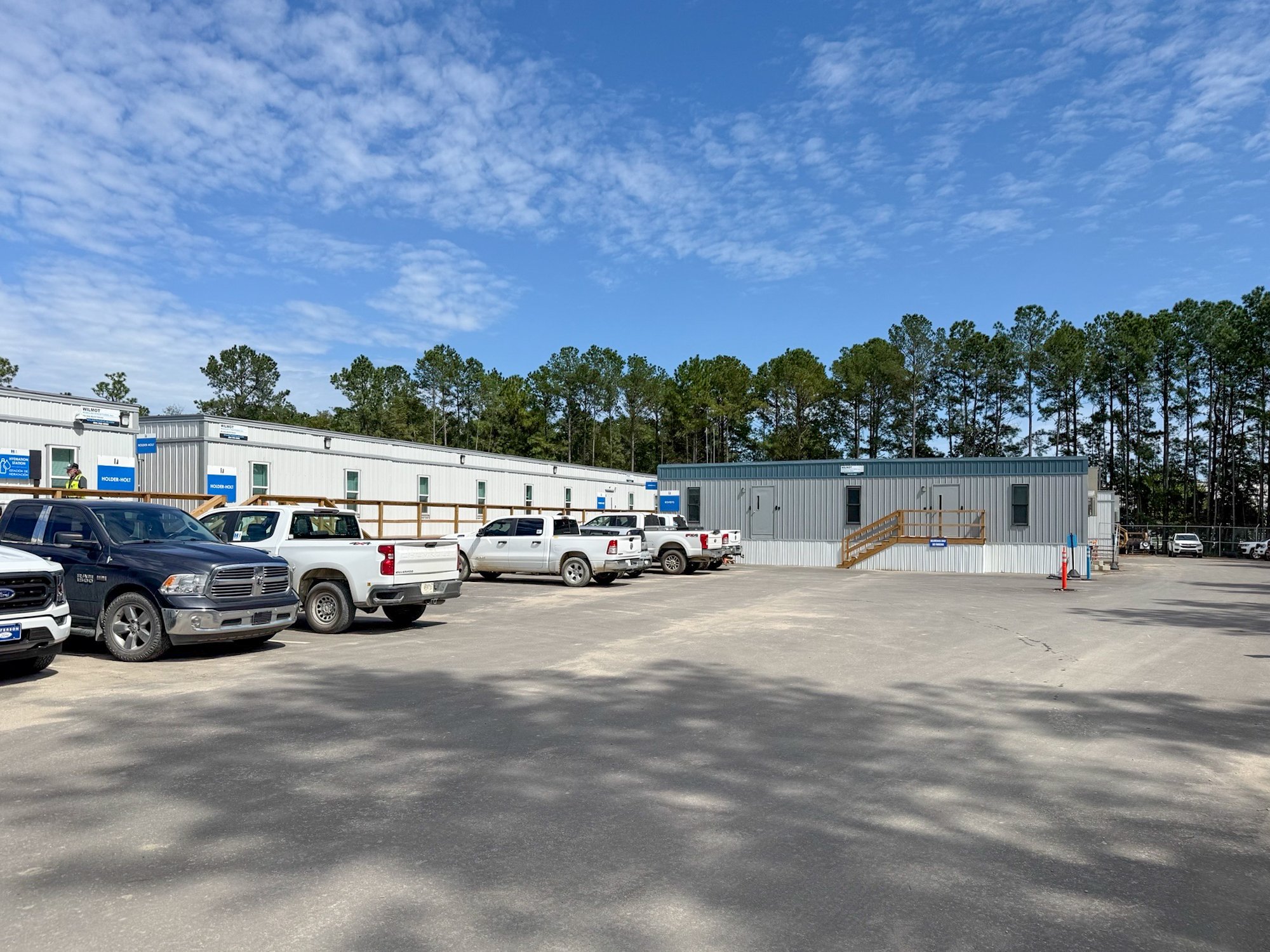
Construction/Contracting Company, Temporary Office Space
One of the clearest sustainability advantages of relocatable modular buildings is how they cut construction waste. Traditional projects often over-order materials to hedge against damage, theft, or design changes, and anything unused may end up in a dumpster. In contrast, modular manufacturers operate in a controlled plant environment where material purchasing, cutting, and storage are tightly managed.
With standardized module dimensions and repeatable floor plans, it’s far easier to optimize material use. Offcuts from one project can be used on another, and automation or digital design tools help minimize scrap.
Studies of modular construction have repeatedly found significant reductions in waste compared to site-built projects—an outcome echoed by industry resources like this overview of modular sustainability: Modular Construction for Sustainable Building.
Relocatable buildings also reduce waste at the end of a project’s life. Instead of demolishing a temporary structure and hauling debris to a landfill, modular units can be removed, refurbished, and redeployed on another site. Components such as doors, windows, and mechanical systems are designed for repeat use, extending their service life far beyond a single project.
Construction-phase disruption is another environmental factor. Because most work happens off-site, there is less dust, noise, and site disturbance around sensitive areas like schools, hospitals, and occupied campuses. Shorter on-site schedules mean fewer delivery trips and reduced idling of heavy equipment, which helps lower local air pollution and greenhouse gas emissions.
Water use can also be better controlled in a factory setting, where fixtures and plumbing assemblies are tested efficiently, and leaks are caught before arriving on site. Combined with options for low-flow fixtures and high-efficiency HVAC systems, relocatable modular units can achieve strong operational performance from day one.
Finally, many relocatable modular fleets now incorporate energy-efficient envelopes and can be upgraded with advanced controls, LED lighting, and even rooftop solar where appropriate. When these features are paired with the inherent reusability of modules, the result is a significantly lighter environmental footprint than constantly building and demolishing site-built structures.
Real-world Scenarios Where Relocatable Shines
Educational Facilities
To understand where relocatable modular buildings deliver the most value, it helps to look at specific scenarios that many Mid-Atlantic organizations face. Consider a school district planning a multi-year modernization program.
Rather than installing traditional “temporary” classrooms that will be demolished at the end of each phase, the district can lease relocatable modular classrooms that move from campus to campus as projects progress. Each relocation avoids the need to build anew, saving materials, time, and money.
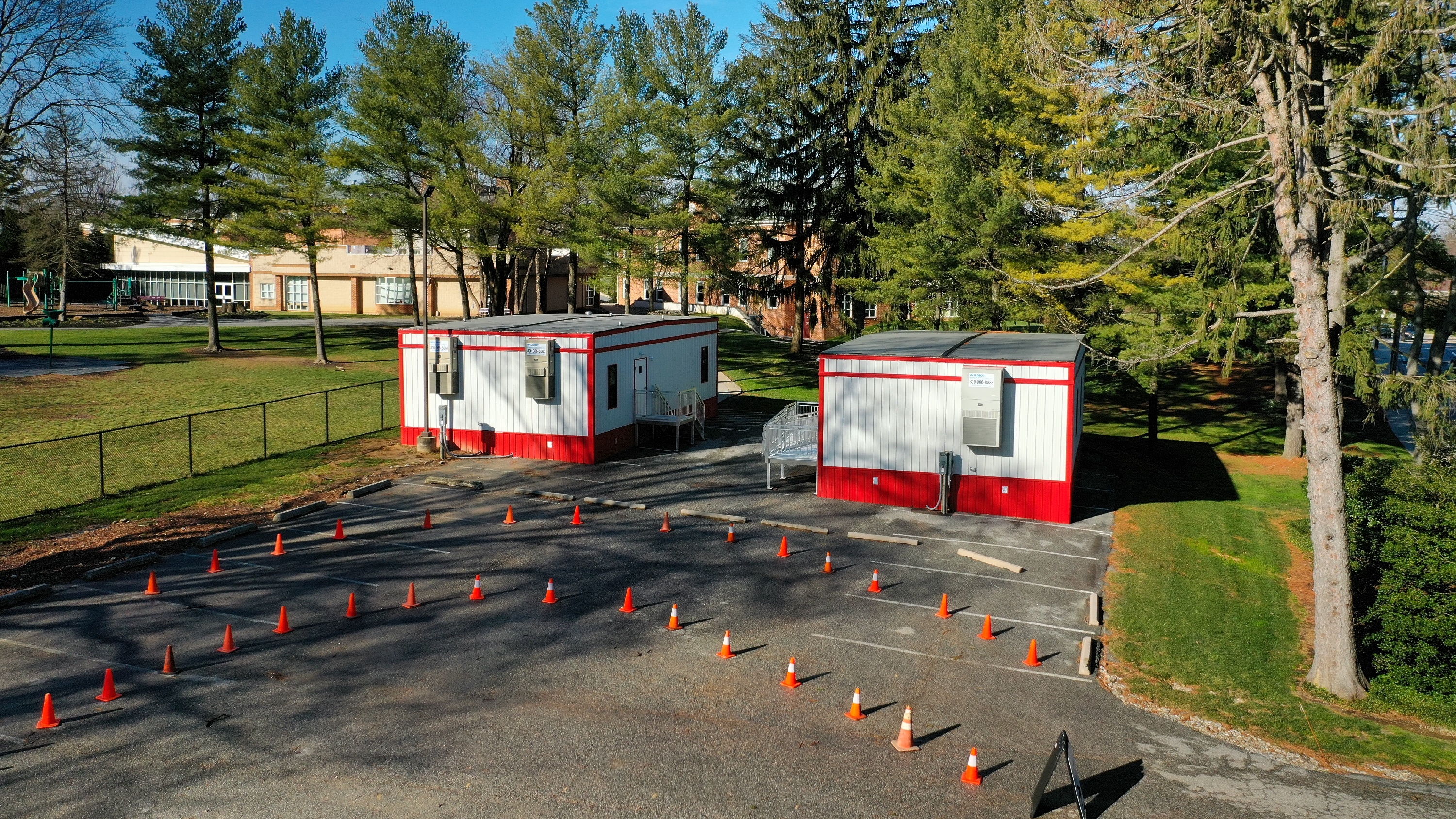
Boys Latin School, Temporary Classroom and Health Suite Space
Construction Site Offices
On construction sites, relocatable modular offices and break areas can follow large infrastructure or industrial projects from phase to phase. Instead of assembling and dismantling makeshift facilities, contractors can rely on standardized, code-compliant spaces that arrive ready for use and depart when no longer needed.
This model is common among modular providers who support construction and industrial clients, as discussed in resources like What Is Relocatable Modular Construction and When to Use It.
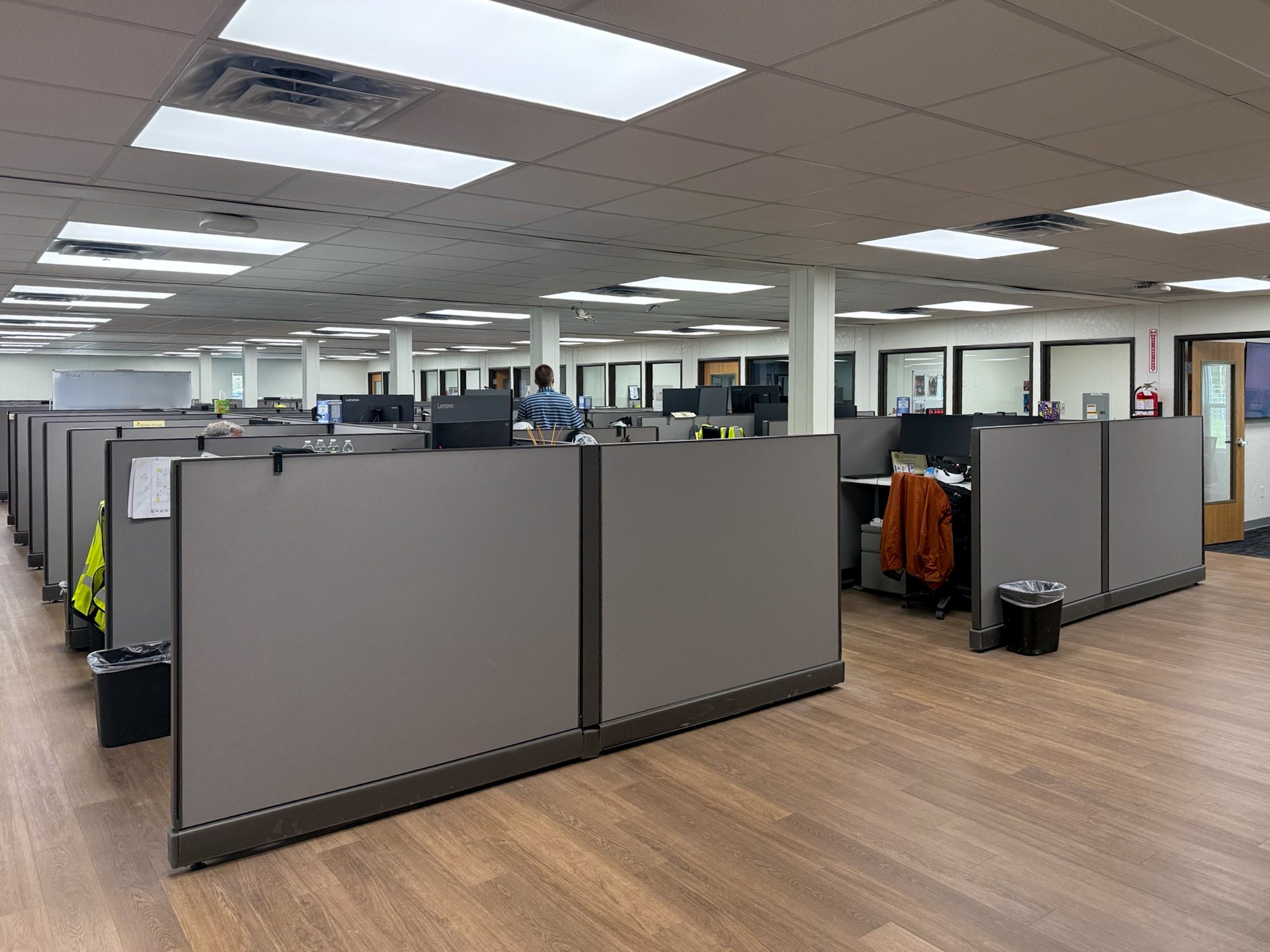
Construction/Contracting Company, Temporary Office Space
Healthcare Facilities
Healthcare systems can also benefit from relocatable buildings when launching pilot clinics, testing new service lines, or responding to surges in demand. A relocatable modular clinic allows providers to stand up fully equipped exam spaces in parking lots or on underused parcels, then shift those facilities as population needs change.

Hope House, Temporary Office Space & Treatment Facility
Government & Rapid Response
Public agencies, from emergency management offices to transportation authorities, frequently need space that is both robust and temporary. Relocatable modular structures can house command centers, training rooms, ticketing offices, or visitor services with far less disruption than constructing site-built alternatives.
.jpg?width=5472&height=3078&name=BCFD%20(44).jpg)
BCFD Training Facilities
Across these scenarios, the pattern is the same: relocatable modular buildings provide high-quality space exactly where and when it’s needed, then move on instead of being torn down. That “design for reuse” mindset is at the heart of circular, sustainable construction.
For organizations committed to shrinking their environmental footprint while staying agile, relocatable modular solutions are a powerful tool. Contact Wilmot for more information on our temporary building solutions.